For girls and women living with PCOS - you are not different
- Gabrielle
- Sep 19, 2022
- 3 min read

A teacher and mom recently told me about her daughter who suffers from PCOS and asked for my opinion as a trainer about how to help her. I suggested she work with an RD/nutritionist because 1. it's always good for anyone to learn from a professional the basics of nutrition for the body and 2. her daughter struggles with one of the effects sometimes caused by PCOS, insulin resistance.
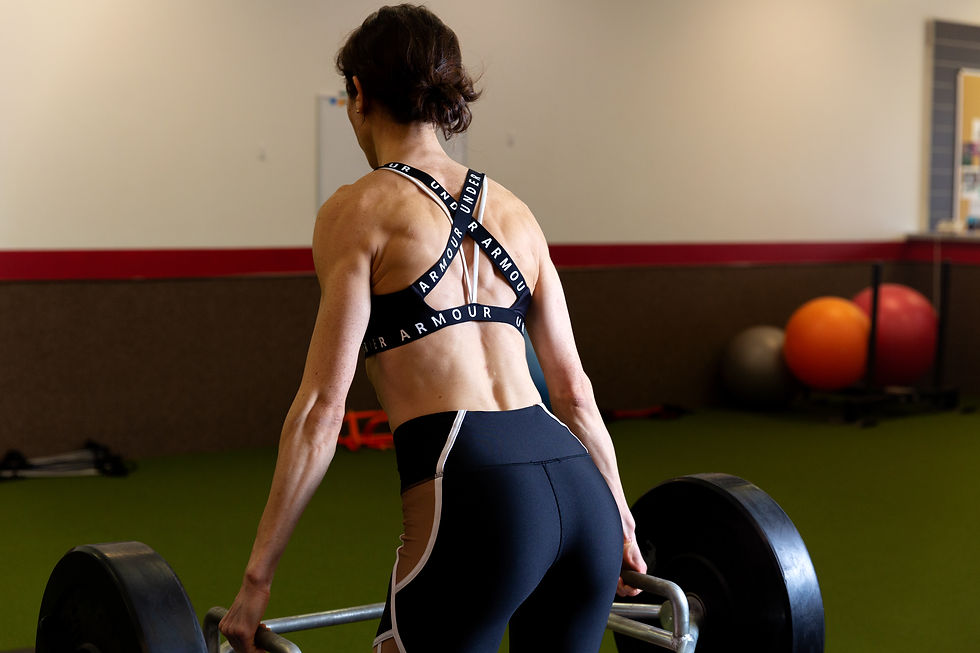
I also suggested she exercise regularly, anywhere between 3-5 days a week, splitting it between the main course of LIFTING and a side dish of WALKING to start in order to better her heart and lung health. During this conversation, her mother told me that she is fearful of lifting heavier because she read somewhere that women living with PCOS shouldn't lift heavy. So this is what I did, I referred her to an excellent nutritionist in the area, briefly went into how lifting heavier builds muscle mass which in turn helps with insulin sensitivity and weight management, and lastly, I put together a short document laying out some general guidelines and suggestions for where to begin. Here it is.....
You are not alone - 1 in 10 women have PCOS and 20% of women between 10-45 years old are diagnosed with it
You are not different because of it
Want to strive for lifestyle intervention with
Regular exercise/daily movement -this will address your cardiorespiratory health (heart and lungs)
Start with daily walks- start with a short walk, then increase the duration each week
Get more movement in throughout your day is always a good thing for your physical and mental health
Strength training for maximal strength and hypertrophy, not endurance
In order to achieve this, you must not be afraid to lift heavier – lifting 5lb dumbbells for 20-40 reps is no where near the full capacity of work that your muscles can perform
You want to gradually increase the stress on your skeletal muscle in order to increase your body’s work capacity and increase your body’s amount of lean muscle mass. You do this by increasing the weight and volume (#sets and #reps) and by manipulating the tempo and rest intervals.
You have to ditch the misconception that lifting heavy makes women bulky – lifting heavy helps to change body composition (decrease body fat and increase muscle mass) and the more muscle you have, the better your overall health and metabolism will be for it
Strength training decreases insulin resistance
Growing more muscle cells through lifting helps to keep your blood sugar at a healthy level because muscle cells are the main consumers of glucose
You also achieve this through the quality of carbs (eat fiber) and the even distribution of carbs throughout the day
Makes muscle cells more sensitive to insulin, which gives your pancreas a break to keep your metabolism running smoother
Having a slab of muscle not only creates a lean look, but has vast overall health benefits
you are physically stronger and more independent
better immune health and better physical health markers -blood sugar, BP, cholesterol
more confidence and security in oneself - helps mental health and self belief
Adequate and Quality Nutrition
Adopting a lifestyle approach and mindset change so you become more mindful about your relationship with food – are you eating because of a specific emotion or out of physical hunger cues
Controlling carb intake is important but you never want to eliminate whole food groups or macros (fats, protein, and carbs) because it has the potential to lead to disordered eating/unhealthy relationship with food and too little carbs affects energy levels; carbs are your body’s preferred source of energy
Recommend anywhere between 35-50% of total calories come from carbs
Get adequate fiber intake (20-25g) because fiber, which only comes from eating carbs, helps to decrease androgen levels (sex hormones) in the blood
Strive for quality and even distribution of carbs throughout your day; strive to eat a healthy fat, protein, and complex carb at each of your meals
Identify which foods you like, what is nutritious, what will nourish your body, and be selective in what you CAN HAVE, not what you can’t have
This last point is important because women who live with this condition feel different and isolated. They think because their doctor gives them what they CAN'T eat or what they should CUT OUT of their food choices, that they can't go out socially and enjoy pizza with friends or they shouldn't have a slice of cake at a birthday party. This is simply not true. One should never listen to a professional who says to eliminate entire macros or entire food groups. This generally does not serve one's overall health in a good way. So for women with PCOS, managing carb intake is important but you shouldn't cut them out entirely.


Comments